Beverages will hit $3Tn by 2030. Karan Aujla Wins. Mark Cuban thinks otherwise.

Mark Cuban has a beverage problem. Or, more accurately, he has a problem with people who think selling drinks is easy money.
On Shark Tank, food and drink pitches are everywhere. Shark Tank Index, a third party tracker, counts 319 pitches in its combined Food & Drink category. That is not 319 beverage pitches, but it tells you something about how many entrepreneurs fancy their chances in the business of putting things in people’s mouths.
Mark knows the catch. Drinks are expensive to scale, shelf space is always a fight, distribution eats time and money and marketing swallows the margin.
Dear Mark, my celebrity friends think otherwise.
From Karan Aujla in India to Jay Park in Korea, Kim Kardashian and Emma Chamberlain in the US, and Robbie Williams in Australia, famous people are moving beyond endorsements into beverage ownership, investment and brand building.
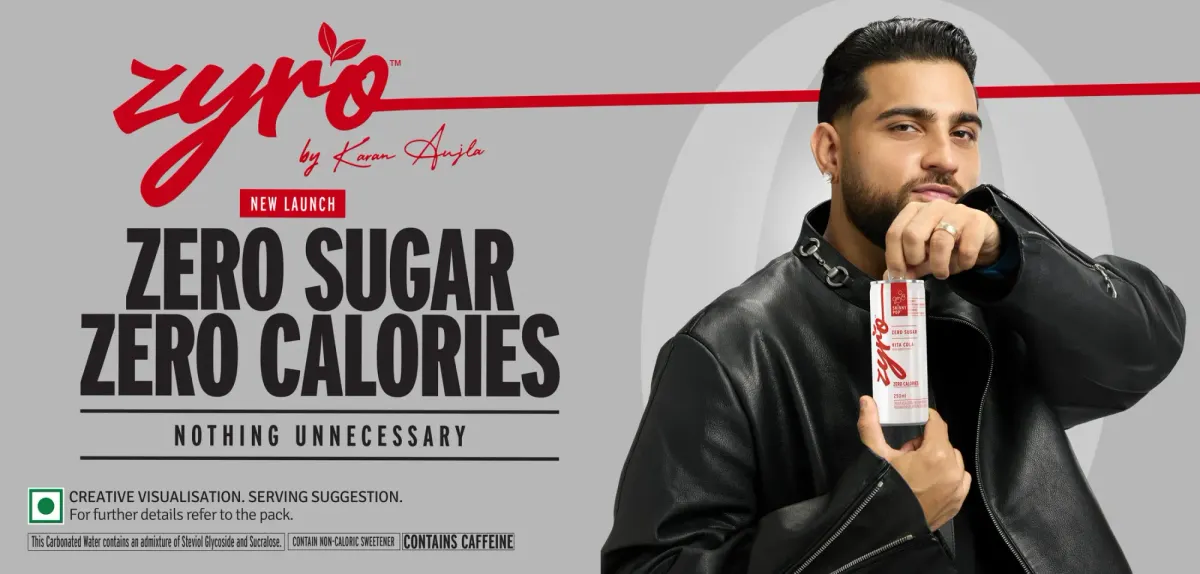
KARAN AUJLA ISN’T JUST PUTTING HIS FACE ON A CAN. ZYRO.
Karan is culture. Ed Sheeran said this. I of-course know it to be true with another 17.9 million monthly Spotify listeners. He sells out stadiums around the world, has hit 8Bn streams recently and from Netflix to Jimmy Fallon, everyone wants a piece of him.
Now he is building Zyro, a zero sugar, zero calorie energy drink brand, as a co-founder. This is a global celebrity turning fandom into a consumer business. Welcome to my world.
The play is obvious, and potentially powerful. Karan can bring a ready made audience, cultural credibility and a launch moment that most new beverage brands could only dream of buying. His fans already buy tickets, stream music, wear the merch and follow the lifestyle around the artist. A drink is another way into that relationship.
But the real test starts after the launch buzz. Can Zyro get into enough fridges, stores and hands? Will people buy it again when there is no concert, no social post and no celebrity appearance?
That is where Viraj Bahl comes into the picture.
THE UNGLAMOROUS BIT: GETTING THE PRODUCT EVERYWHERE
Bahl’s Veeba built its business through the less glamorous machinery of food retail: manufacturing, distribution, retail relationships and repeat purchases. Reporting on the business has highlighted the importance of traditional trade, including local stores, alongside newer channels such as quick commerce.
That infrastructure is not as Instagrammable as a stadium launch. It is also the reason a product can keep selling after the launch campaign has disappeared.
Zyro has the cultural entry point. The challenge is building the retail and distribution muscle to match it. Publicly available information does not yet establish the brand’s sales or repeat purchase performance, so it is too early to declare victory.
But I have always trusted Karan's moves and this one will be worth watching. The next generation of celebrity businesses will not be built on endorsements alone. The interesting ones will be the brands their stars help create and grow.
BADSHAH WANTS A BIGGER POUR. Shelter6.
Badshah has also stepped into the ownership game with Shelter 6, a vodka brand launched with Cartel Bros in 2025.
The company has talked about capturing a 25% share of India’s vodka segment and reaching a ₹700 crore valuation within three years. Those are ambitions, not achievements, but they show the scale of the play with a celeb in your corner.
Alcohol is an especially interesting category for celebrity brands. The product can be tied to nightlife, music, status and social occasions. A performer already has a relationship with those spaces. The opportunity is to turn that cultural connection into a product people choose when the artist is nowhere in sight. Surely they know this bit is called business.
Korea and Won Soju with Jay Park.
Jay Park launched Won Soju in Korea in 2022, taking his music audience into a category with a strong local identity. Korean reporting has cited 10,000 bottles sold at its launch pop up and more than five million bottles sold through GS25 convenience stores.
Those figures are a useful reminder that celebrity beverage ventures can move beyond the launch event when the product finds a route into everyday retail.
BTS offers a different model. In 2026, the group launched Arih with Korean food companies Paldo and HY, with products including energy drinks and sodas alongside noodles. This is a collaboration with established food businesses, not simply a celebrity startup appearing out of nowhere.
The common thread is that music fandom can open the door, while existing consumer goods expertise can help a product get through it.
UPDATE, CHAMBERLAIN, PRODA. A new set of Co-Founders.
Kim Kardashian joined functional beverage brand UPDATE as a co-founder in 2026. The business had already been operating for around four years, so this was not a company she created from scratch. Her arrival coincided with a brand redesign, giving an existing business a fresh cultural jolt.
Emma Chamberlain took a more direct route with Chamberlain Coffee, a brand built around the creator’s own identity. Forbes estimated the business generated around US$20 million in revenue in 2023. That is an estimate, not audited current revenue, but it offers a sense of the commercial potential when a creator’s audience and a product category fit together.
Justin Timberlake and Jessica Biel joined protein soda brand PRODA as co-founders in October 2026. The company had already been founded earlier in the year. Its product offers 10 grams of whey protein per 12 ounce serving, positioning it in the growing overlap between soft drinks and functional nutrition.
The pattern is becoming familiar. Celebrities are not always starting from zero. Sometimes they invest in an existing company, sometimes they bring creative input, and sometimes they attach their names and audiences to a product that is already being developed.
The label “co-founder” does not tell you how much equity someone owns or how much work they do. But it does signal a shift away from the old endorsement cheque.
SNOOP IS SMART. But so is Robbie, Dr. Dre and Ben Stiller.
Not every celebrity beverage needs to be a sugary energy drink.
Australian non alcoholic beer brand Heaps Normal brought Robbie Williams on board as an investor and creative collaborator in 2025. His stake and investment amount were not disclosed, but the partnership puts a global music name behind a category built around drinking differently rather than drinking more.
In the US, Dr Dre and Snoop Dogg launched Gin & Juice canned cocktails in 2024, extending the name of their famous collaboration into a ready to drink product. The brand has a distribution relationship with Southern Glazer’s Wine & Spirits, one of the major players in US beverage alcohol distribution.
Ben Stiller has gone into soda with Stiller’s Soda, co-founded with beverage entrepreneur Alex Doman. The initial range included Root Beer, Lemon Lime and Shirley Temple.
Different products, different audiences, different business structures. But the celebrity advantage is clear for all of us to see, they deliver a story and the product with it.
PRIME. No More?
But fame does not guarantee survival. PRIME became a cultural phenomenon, especially among younger consumers, through the combined reach of its high profile creators and aggressive online attention. Yet in Australia, Congo Brands Australia, the local company behind PRIME, entered voluntary administration in July 2026.
That is not the same as saying the global PRIME brand has collapsed. It is a warning about the Australian business, and about the gap between cultural heat and a sustainable operation.
Going viral is not a distribution strategy. A queue is not a repeat purchase rate. And a product that dominates social media can still face very ordinary commercial problems once the hype cools.
SO, IS MARK CUBAN RIGHT?
The entrepreneur in me says, well, yes.
Shelf space is truly expensive. Distribution is hard. Margins can be ugly. Celebrity involvement does not make those problems disappear.
I have enabled a tall list of endorsements and helped brands bring celebrities on board. I would vouch for the fact that celebrities bring something a conventional startup often struggles to buy; an audience, cultural relevance and a reason for people to try a product in the first place.
For an established beverage company, that attention can be useful. For a new brand, it can be the difference between getting noticed and being ignored.
If you find value in this piece, please do share it ahead with someone who would love to read it.