Dear Artist, Capital has a memory. It does not forget.
Sidhu Moosewala would be at Jantar Mantar. India's youth are protesting and its artists are missing. A letter on why capital remembers who stayed silent.

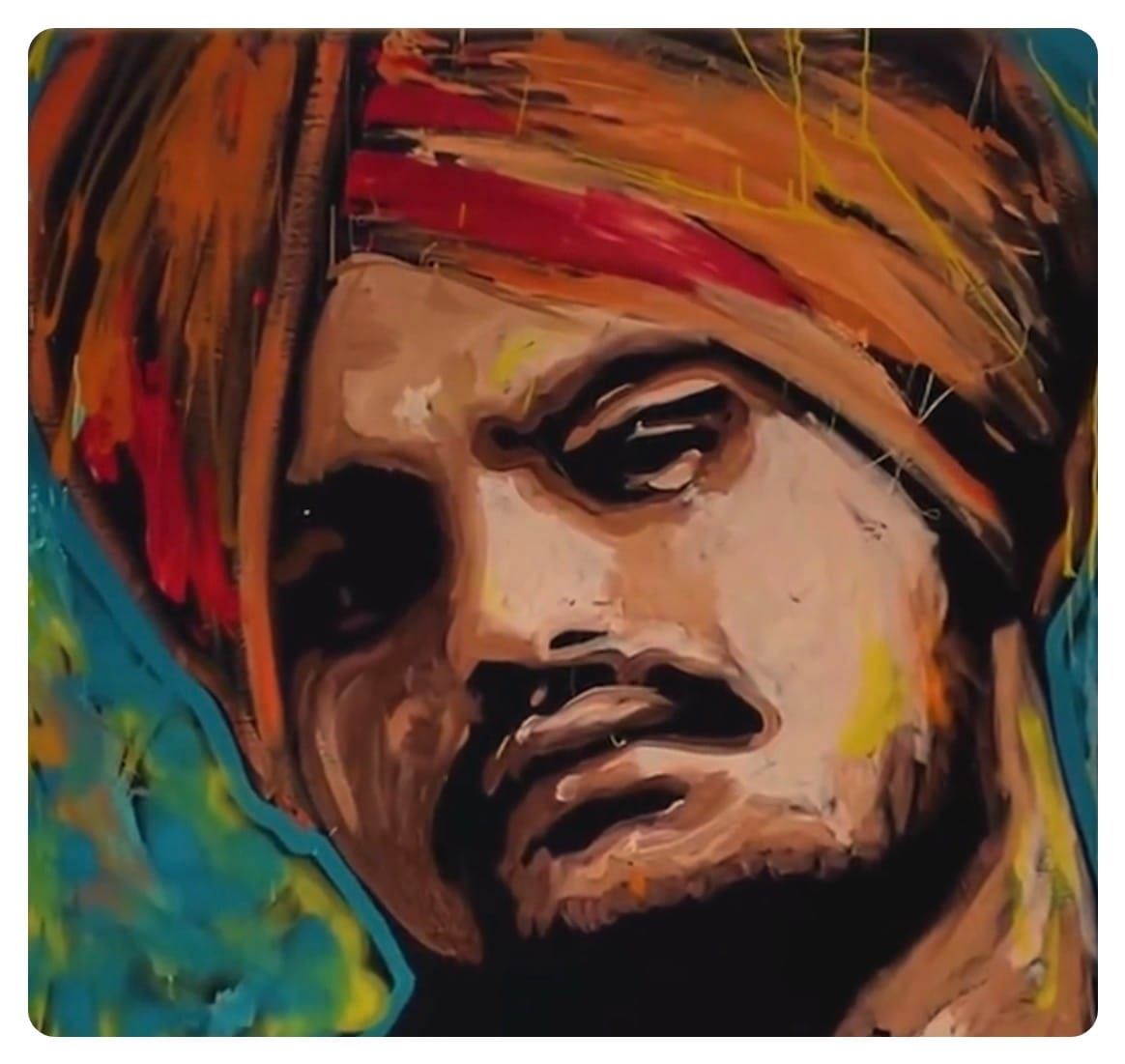
One night, years ago, I sat across a bonfire in a cold Punjab village, interviewing a man I will always remember as the loudest, truest, most prolific voice of the common man in India. A voice that built movements with every song he wrote. If Sidhu Moosewala were alive, I believe, as an artist, as a voice followed by billions in culture, he would be at Jantar Mantar today. As my feed from India fills with shock and grief, as a man sits on hunger strike, as the youth of the country protest in the most disciplined, nonviolent register I have seen in years, the faction of culture that profits most from that youth, the artist in music, comedy, film, and poetry, is largely missing. As a creator and producer of culture myself, that absence of the artist says "buy my ticket, stream my track, follow my social, but I cannot stand with you when you need me most".
What Happened
On May 3, 2026, more than 2.27 million students sat for NEET UG, India's national medical entrance exam. Nine days later, the National Testing Agency cancelled the result after investigators found a leaked guess paper matching the real one. A retest was ordered for June 21. In the weeks between cancellation and retest, at least 20 students took their own lives, according to BBC reporting, a toll that climbed steadily as the crisis wore on and families across the country buried children who had spent years, and in several documented cases their family's land and savings, preparing for a single morning.
Since June 6, students and youth organisations, led by the Cockroach Janta Party alongside the Students Federation of India, All India Students Association, and All India Students Federation, have held a continuous sit in at Jantar Mantar in New Delhi. Their demands are specific and reasonable, the resignation of Union Education Minister on grounds of accountability, and compensation of one crore rupees for the families of the deceased. On June 28, activist Sonam Wangchuk joined the site on an indefinite hunger strike that ran twenty days before he was hospitalised by force this past weekend. On Monday, more than ten thousand protesters attempting to march toward Parliament were met with a lathi charge and tear gas. Delhi Police reported 118 personnel injured, hospital sources counted roughly sixty protesters treated, and Amnesty International has already gone on record describing the response as a crackdown on a peaceful demonstration.
None of this is a side story out of India. It is the largest country on earth by population, at the exact moment its most valuable generational asset, the youth market that every global brand and every touring artist is chasing, is standing in the street asking to be heard.
Why This Belongs In A Capital Publication
The Chaos Drop exists to track the business and capital of culture, and there is no cleaner test case of that intersection than this one. India's live events economy is not a side hustle anymore. BookMyShow's Throwback 2025 report counted 34,086 ticketed live events across the country last year, a 17 percent rise in footfall year on year. FICCI and EY put the organised live events market's growth at 44 percent in 2025 alone. This is a market global artists have chased hard, and Delhi, the exact city where students are being lathi charged, has been one of their most rewarding stops.
Ed Sheeran played his first ever Delhi NCR show in 2025, his fourth India tour since 2015, and has said on record that India is his favourite place in the world. Chris Martin and Coldplay, whose India shows sell out within minutes and whose fan base may be the largest single global fandom touring the country today, have spoken for years about their love for Indian audiences. Trevor Noah played three consecutive nights at a Delhi NCR arena in 2025, telling the crowd he had loved India's culture his whole life before he ever stepped on that stage. Twenty One Savage made his India debut in Delhi NCR. Charlotte de Witte played Delhi NCR as part of her India run. Each of these names has stood on a Delhi stage, taken a Delhi crowd's money and devotion, and said, in public, that they love this city and this country. None of them has said a word about what is happening a few kilometres from those same stages right now.
This is the paymaster. Students and young graduates are the single largest ticket buying segment for concerts, comedy tours, and film openings in India. They are also the segment most active in building an artist's digital reach, the segment that turns a release into a trend, a tour date into a sellout, a name into a movement. When that paymaster is beaten with sticks on the street for demanding a fair exam and accountability for its dead, the near total silence from the very artists whose income depends on them is not a neutral fact.
The Silence, Priced In
Across film, music, poetry, and comedy, Indian and international alike, the volume of public solidarity from the biggest cultural names touring or based in India has been strikingly thin measured against the scale of what students have built for these same artists at the box office and on streaming charts. This is not a claim that no individual voice anywhere has spoken, I love what i see about the artist in hip hop from India and their contribution to the protest but culture is too vast and too fast moving for any publication to certify silence with full precision. It is an observation, plainly stated, that the collective response from the artists who profit most from this exact audience has not matched the scale of the moment, nor the scale of what those same figures have taken from this audience in ticket revenue, streams, and brand value over the past two years.
That gap will not stay invisible for long. Fandom in India today is not passive consumption, it is loyalty and has a memory. The students filling Delhi arenas for Ed Sheeran, Trevor Noah, and every other global and Indian name chasing this market are the same students who will decide, over the next decade, who they choose to keep buying tickets for. An industry chasing India as its next great growth market, projected by EY Parthenon and BookMyShow to keep compounding near 19 percent annually, would do well to remember that the audience underwriting that growth is watching who showed up.
The Point.
India's students are not asking artists to take a side in a political contest. They are asking for a fair exam, an accountable minister, and dignity for their dead. That is not a radical ask, it is the most basic contract between a citizen and a state, and it happens to be unfolding in full view of a generation that has never been more connected, more organised, or more economically consequential to the people who entertain it. The Chaos Drop does not take political positions. But we track capital, and capital has a memory. The largest ticket buying, most digitally loyal audience culture has ever had in India will remember, with total clarity, who stood with them when it mattered, and who stayed silent while collecting the proceeds of their loyalty.
Dear Artist, Silence, in this business, is never actually free.


